

How To Draw Female Reproductive System
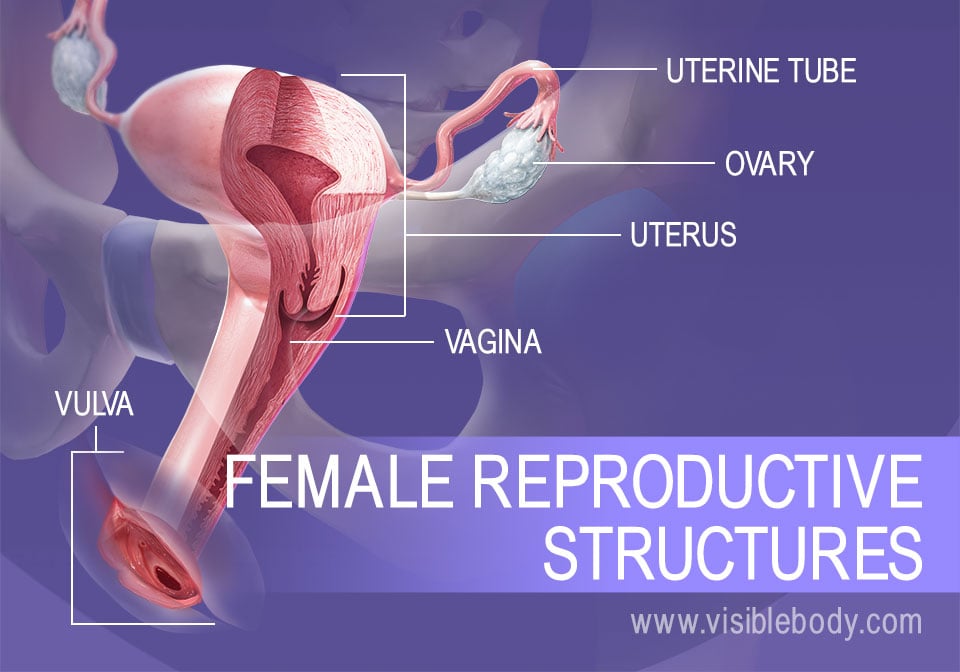
The female person reproductive arrangement includes external and internal genitalia. The vulva and its structures form the external genitalia. The internal genitalia include a iii-part system of ducts: the uterine tubes, the uterus, and the vagina. This organization of ducts connects to the ovaries, the primary reproductive organs. The ovaries produce egg cells and release them for fertilization. Fertilized eggs develop inside the uterus.
1. Generating Eggs: Ovaries Are the Female Gonads
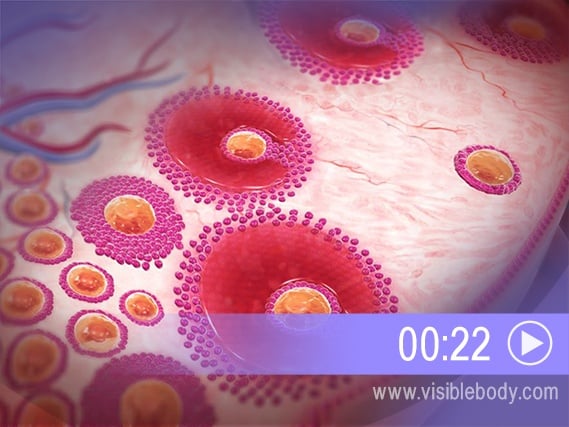
The ovaries are 2 almond-shaped structures that sit on either side of the uterus, continued to the uterine tubes. They produce oocytes (egg cells), as well as estrogen, progesterone, and other hormones. Egg jail cell production, or oogenesis, begins with the primordial follicles. As girls achieve puberty, each ovary contains thousands of these follicles, and each follicle contains a primary oocyte. When follicles mature, some main oocytes become secondary oocytes. By the fourth dimension of ovulation there is but one mature follicle remaining. The remainder of the follicles deteriorate. During ovulation (near once a month), the dominant follicle bursts and releases its secondary oocyte. The oocyte travels into the uterine tube, where it can be fertilized.
2. Egg Cells from the Ovaries Move Through the Uterine Tubes
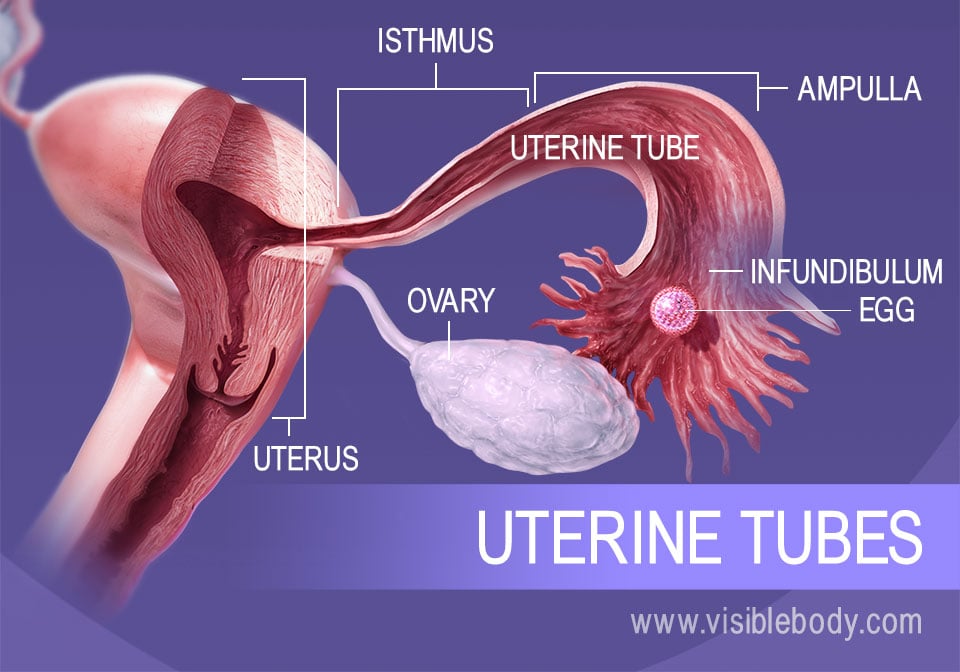
The uterine tubes (besides called Fallopian tubes or oviducts) connect the ovaries to the uterus. The walls of each tube accept an external serous layer, a middle muscular layer, and an internal mucous layer that is continuous with the inner lining of the uterus. Each uterine tube can be divided into iii parts: The infundibulum is open to the abdomen. A constricted section called the isthmus connects with the uterus. Finally, an intermediate, dilated portion, the ampulla, curves over the ovary. Egg fertilization usually occurs in the ampulla. The eggs then travel through the isthmus into the uterus.
3. The Uterus Expands Every bit an Embryo Becomes a Fetus
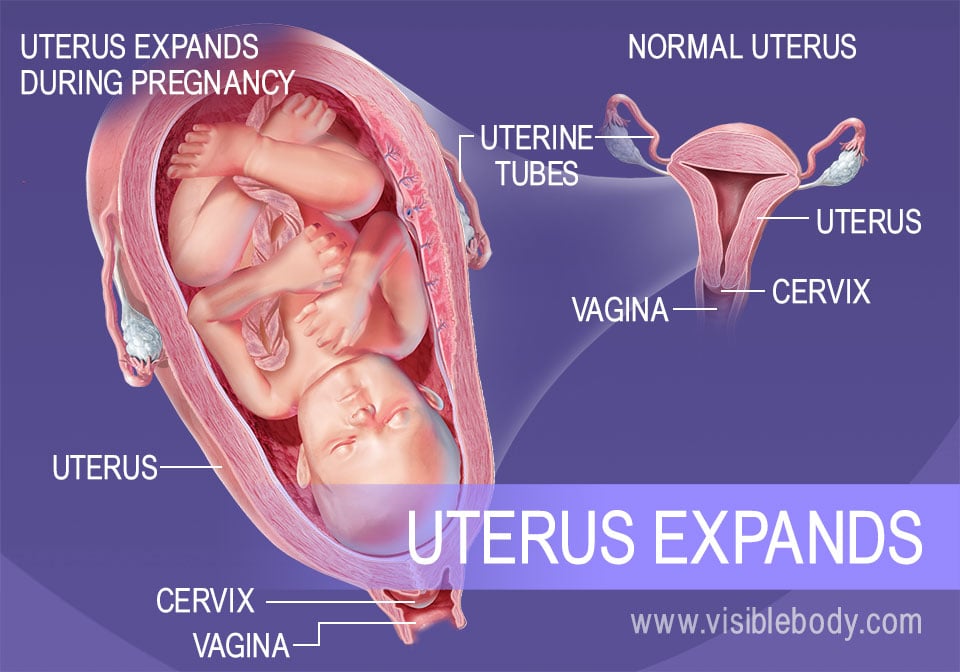
The uterus is a pear-shaped organ located in the pelvic cavity between the bladder and the rectum. It is a hollow organ with thick, muscular walls. The uterine tubes pb from the ovaries into the upper role of the uterus (one tube on each side). The lower part of the uterus constricts into a segment called the cervix, which leads to the vagina. During menstruation, the inner lining of the uterus is shed. When a woman becomes pregnant, nevertheless, the fertilized egg embeds itself in the uterine wall and period is prevented. The uterus expands dramatically as the egg develops into an embryo and and so a growing fetus.
iv. The Vagina: A Tunnel with Three Core Functions
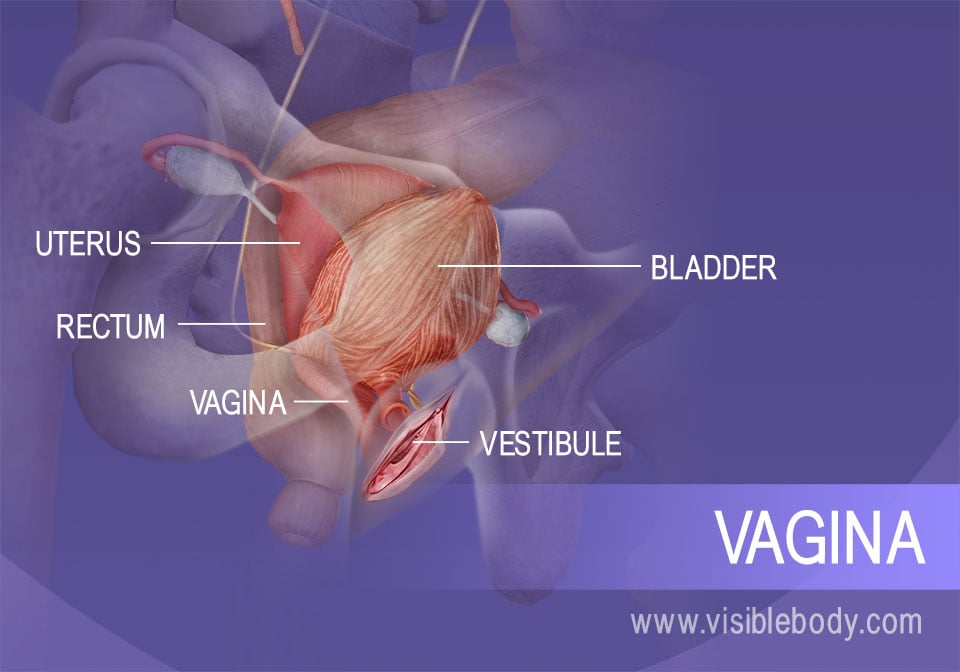
The vagina extends down from the cervix, the lower part of the uterus, to the vestibule, which is role of the vulva and the external genitalia. It sits behind the bladder and in forepart of the rectum. An inner mucous membrane lines the polish musculus walls of the vagina. This lining, similar the inner layer of the uterine tubes, is continuous with the mucous lining of the uterus. The vagina has three core functions: information technology carries menstrual flow outside the body, it receives the male penis during sexual intercourse, and information technology serves as a birth canal during labor.
5. The Vulva Comprises the External Female person Ballocks
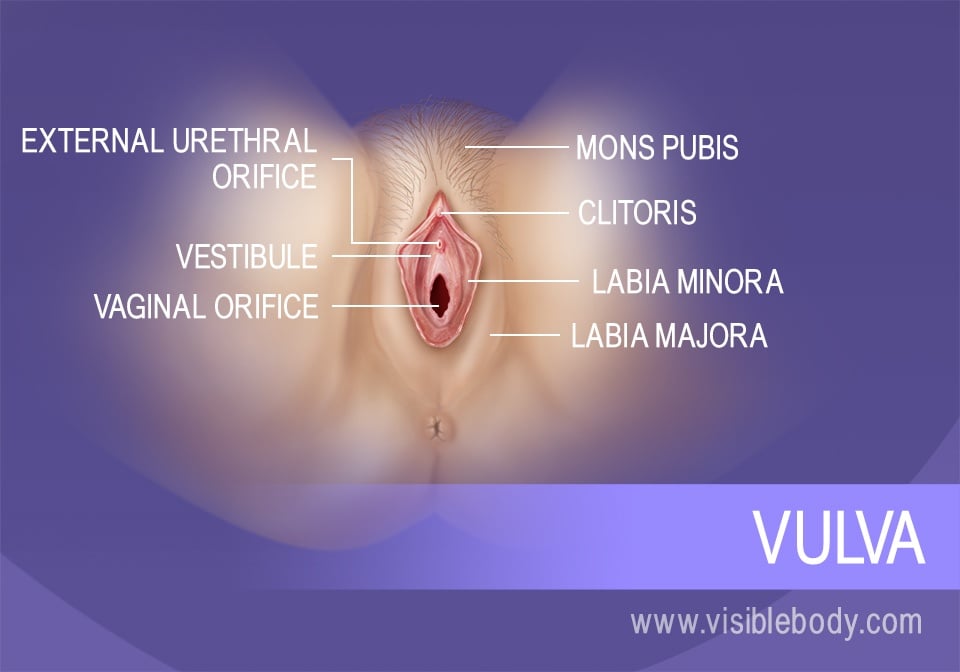
The structures of the vulva facilitate sexual intercourse and provide the archway to and outlet for the internal genitalia. They include the labia minora and labia majora, the mons pubis, the clitoris, the greater vestibular glands, and the entrance hall of the vagina. The foyer includes two openings: the smaller urethral orifice allows urine to exit (as part of the urinary arrangement). The larger vaginal orifice is the entrance to the vagina.
Download Female Reproductive Arrangement Lab Manual

Source: https://www.visiblebody.com/learn/reproductive/female-reproductive-structures
Posted by: saltzimen1990.blogspot.com
0 Response to "How To Draw Female Reproductive System"
Post a Comment